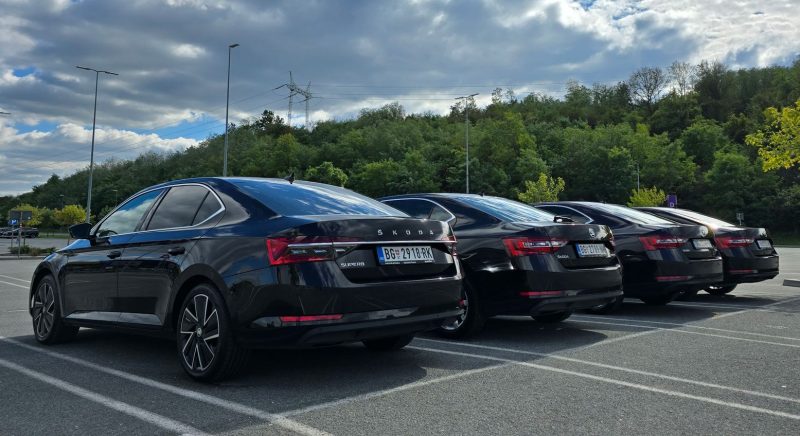
Premium transport doesn’t happen by accident. It doesn’t depend on the chauffeur’s mood, personal taste, or whatever gets improvised that day. The real gap between average and exceptional service opens up only when the rules are clear, measurable, and consistently applied.
Behind every ride we run is an internal chauffeur operating protocol — a document built over years that today underpins how our chauffeur service operates. Its drafting drew on close to two decades of the founder’s hands-on experience in passenger transport, working with demanding clients in situations where there’s no room for error.
Worth flagging: this article isn’t a verbatim copy of that document. The standards manual itself is significantly longer, more operational, and meant only for internal use. What follows are a few of the more interesting excerpts — paraphrased and condensed into the form clients most often experience them in.
Luxury is a system, not a coincidence
The first and most important principle in our protocol is that the quality of a chauffeur service can’t depend on which driver a client happens to get that day.
Chauffeurs work to clearly defined rules of conduct, preparation, and professional presentation. Which means luxury isn’t a “good day” or one driver’s personal effort — luxury is a standard that repeats, without exception.
Whether it’s a one-off ride, chauffeur-driven car hire, or a multi-hour engagement, the client gets the same level of attention, control, and predictability.
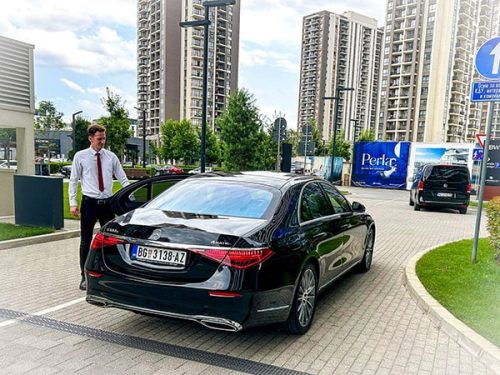
Dress code: no personal interpretation
The chauffeur’s appearance isn’t a matter of fashion or personal style. It’s precisely defined by the rules.
The standard dress code is a black suit, white shirt, and tie. No exceptions, no “good reasons,” no adjustments for personal taste. The goal isn’t aesthetics for its own sake — it’s a professional, discreet appearance that fits the context of premium service.
A consistent chauffeur appearance immediately creates a sense of certainty and clarity — the client knows what to expect, today and tomorrow.
Chauffeur experience: luxury isn’t learned from a manual
While the protocol provides clear rules, a luxury service can’t actually run without experienced people executing it.
Our chauffeurs have years of experience in a premium environment and are used to high expectations. That experience is exactly why the protocol’s rules don’t feel rigid — they feel natural, part of professional behavior rather than mechanical compliance.
That’s why clients often have the sense that “everything just works,” even though every ride is the product of precise preparation.

Vehicle hygiene and order: the details that can’t slip
In our protocol, vehicle cleanliness isn’t just washing and vacuuming.
Special attention is paid to the things passengers tend to notice subconsciously: glass with no smudges, seats with no creases or stains, a floor with no debris, a neutral cabin scent without aggressive air fresheners, and zero items left over that don’t belong to the client.
The vehicle’s interior should never give off the impression that someone else was here just before you. That’s one of the basic rules of a luxury service.
In-car music: a controlled atmosphere, nothing accidental
The audio environment in the vehicle is part of the overall impression — so it’s clearly regulated.
We don’t use the radio, and we don’t lean on the chauffeur’s musical taste. Music plays only from prepared sources — either USB drives the company supplies to every vehicle, or carefully selected ad-free Spotify channels with neutral, unobtrusive content.
That way the client isn’t subjected to local radio stations, ads, or an unsuitable genre. And if the client wants silence, silence is honored without question.
Few services apply this level of control down to this kind of detail.
Discretion and chauffeur conduct
The chauffeur doesn’t start personal conversations, doesn’t ask unnecessary questions, and doesn’t comment on clients, destinations, or situations.
Professional distance, being present without being intrusive, and focus on driving are the foundation of the conduct defined in the protocol. That matters especially with business bookings and clients for whom discretion is essential.
Quality control: standards get verified, not assumed
One of the key differences between us and most similar services is the way we actually verify our standards.
Service quality gets checked through multiple parallel mechanisms: random spot checks in the field, post-ride evaluations, and detailed anonymous surveys we periodically send to clients with no advance notice.
That system means the standard isn’t held in place by the assumption that “everything’s fine” — it’s held in place actively.
This is only part of the protocol
The chauffeur standards manual runs to more than 140 pages of clearly defined rules, procedures, and operational scenarios. What you’ve read here is only a paraphrased slice, adapted for a public audience.
In the actual protocol, non-compliance with any rule is treated as a breach of employment obligations and handled according to internal procedure. The standards aren’t a recommendation — they’re an obligation.
That’s exactly why we don’t publish the document in full. Not out of secrecy, but because behind it sits years of work and experience we’d rather not see lifted by others without an understanding of the context it grew out of.
A luxury service doesn’t run on promises. It runs on a system that works.